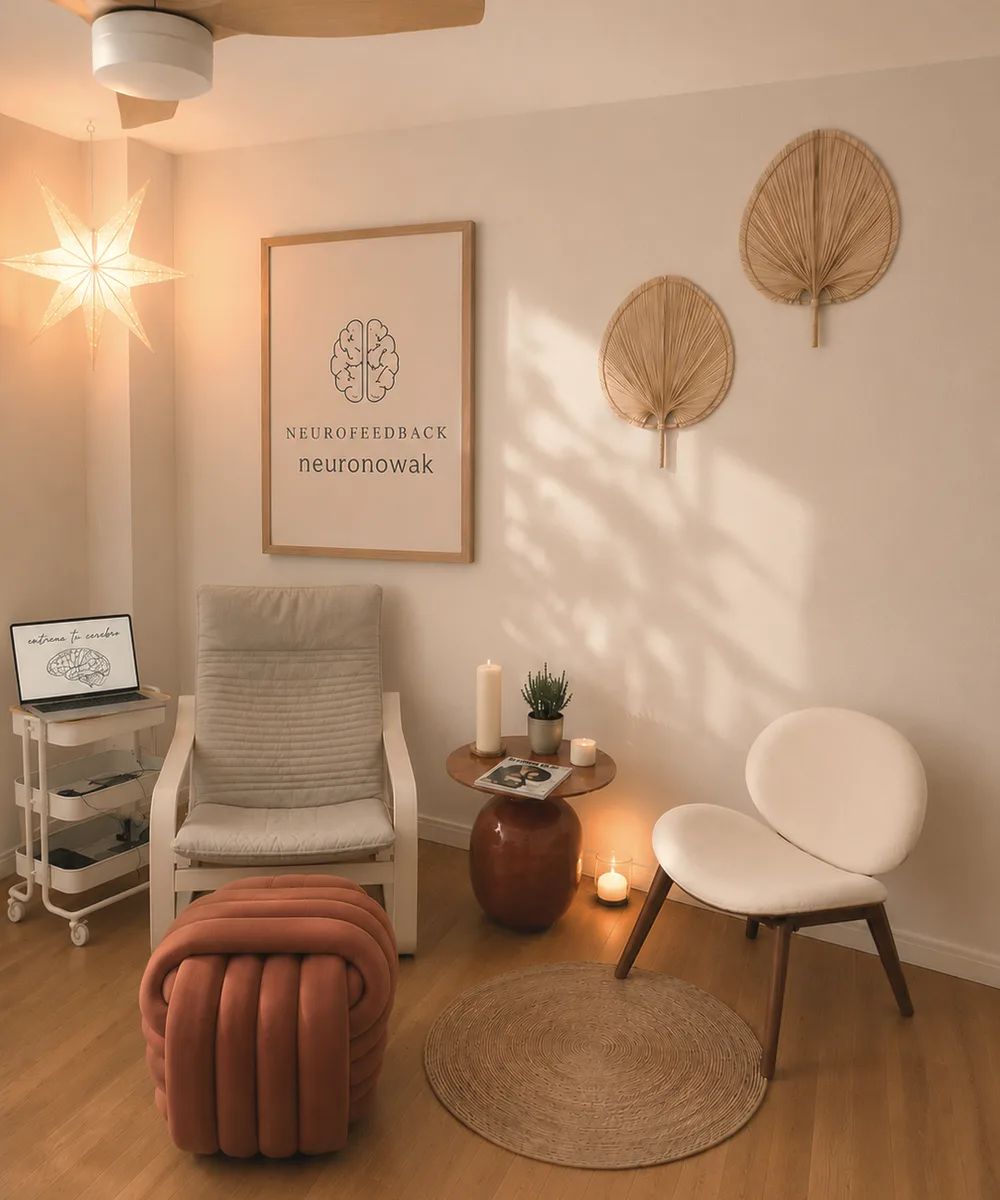
Neurofeedback for sports performance
You’ve put the training in. The technique too. And still, there are days when your body responds and days when it doesn’t, without you really knowing why.
The difference is hardly ever in your legs. It’s in the minute doubt creeps in, in the mistake you drag along for three more plays, or in the night before without proper sleep.
Performance doesn’t depend on the body alone. It depends on a nervous system that can switch on when needed, hold focus under pressure and recover afterwards.
Hardly anyone trains that. And it can be trained.
No prior diagnosis neededWithout medicationFrom around age 3Cerrado de Calderón (Málaga) · La Cala del Moral

What usually improves
In competition
- Concentration at key moments, with noise and with the score against you.
- Coming back to the present after a mistake instead of dragging it along.
- Well-tuned activation: neither over-revved nor cold.
- Quicker, cleaner decisions.
In an athlete’s day-to-day
- Sleeping better the night before.
- Recovering better between training sessions.
- Less pre-competition anxiety and more enjoyment.
NEURONOWAK is a brain training centre offering neurofeedback in Málaga and La Cala del Moral. Individual, in-person sessions, no prior diagnosis needed and without medication. What follows is what I see in my practice, not a promise.
How it works in the brain
Under pressure, the brain tends to go to extremes: it either overheats or freezes. Both cost points, and neither is fixed by willpower.
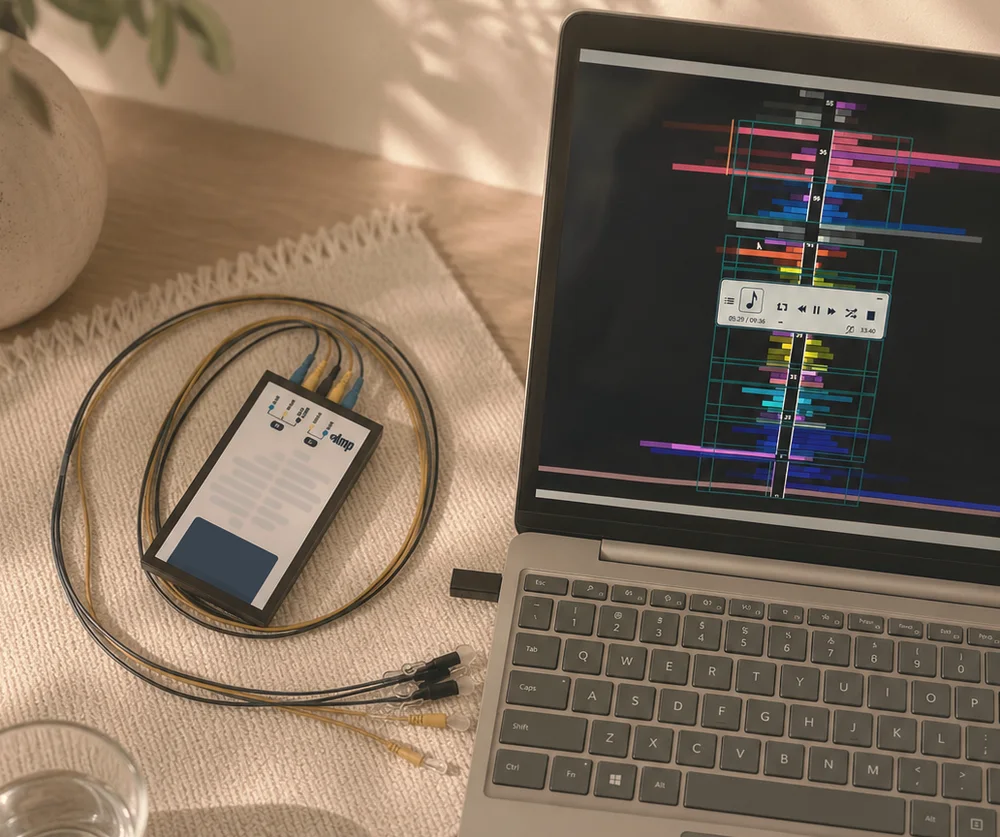
Brain training works on that regulation. The system reads your activity in real time and feeds it back, and the brain learns to find its optimal level of activation on its own and to get back to it after a slip.
It doesn’t replace training or work with a sports psychologist. It’s the layer underneath: the state from which everything else is carried out.
The first things people usually notice are sleep and recovery between training sessions, which is where improvement is really built. Then comes the visible part: holding focus for longer and letting go of mistakes sooner.
See what a session looks like from the insideA short reel on @neuronowakWatch the reelWhere you lose a match you knew you could win
It’s hardly ever lost in the physical preparation. It’s lost in the minute doubt creeps in, in the mistake dragged along for three more plays, or in the night before without proper sleep.
Your body is trained. What hardly anyone trains is the part that decides whether that body responds under pressure.
And that can be trained too.
What exactly gets trained
- Focus under pressureKeeping your attention on what matters when there’s noise, fatigue or the score against you.
- Handling mistakesComing back to the present after a slip instead of dragging it along. It’s one of the clearest differences between an amateur and a professional.
- RecoveryWinding down after exertion and sleeping properly. Without that there’s no adaptation, and without adaptation there’s no improvement.
How many sessions you need and when you’ll notice
- 33 min
- of music, seated, wearing headphones
- 50 min
- for the whole visit, roughly
- 1–2
- sessions a week
It depends on each athlete. The first things to shift are usually sleep and recovery between training sessions, before performance in competition.
In the first three or four sessions the brain gets used to the system. Between the fourth and the tenth, noticeable changes appear. From the tenth onwards, they hold better.
If you have a key competition coming up, it’s best to start well ahead: this isn’t something you can cram the week before. Most people come once or twice a week. I explain it in detail in what neurofeedback sessions are like.
What you can expect
This doesn’t replace training, rest, nutrition or work with your sports psychologist if you have one.
Every athlete responds at their own pace, and that’s worth knowing before you start.
And if you don’t notice anything after a few sessions, I’ll tell you and we’ll talk about it, rather than just adding more sessions.
«I’ve done 12 neurofeedback sessions with Aurélie and it’s been a very positive experience. It helped me recover and regulate my sleep, and find a greater sense of inner peace.»
FAQ
Is it for amateur sport or only professional?
Both. In fact, amateurs often notice it a lot in their enjoyment: competing with less anxiety and enjoying training more.
Can it be done in pre-season and during competition?
Yes, in both. In pre-season you can go more intensively; during competition it’s best to adjust the frequency so it doesn’t interfere with your training load.
Does it make you sleepy afterwards?
Some people leave relaxed, especially the first few times. That’s why I don’t recommend having a session just before competing until you know how you respond.
Is it legal in competition?
Yes. It isn’t a substance or a device that acts on the body: it’s self-regulation training, just as work with a sports psychologist would be.
How many sessions will I need?
Most people work with a 10-session or 20-session package, at one or two sessions a week.
You’ll find more answers in the FAQ and the prices under pricing and packages.
Keep reading
Training your body and forgetting your mind?
Let’s talk, no strings attached. It’s a free 30-minute first conversation: you tell me about your sport and your goals and we see whether this is a good fit.
or at info@neuronowak.com