Neurofeedback for high professional performance
You’re not unwell. You deliver, you decide and you hold things together. From the outside, nobody would say there’s anything to fix.
But you know you’re performing below what you could. That your decisions at seven in the evening aren’t the ones you make at nine in the morning. That it’s been weeks since you had a proper stretch of deep concentration. And that the weekend no longer recharges you the way it used to.
That isn’t a time-management problem. It’s a problem of cognitive resources, and it can be trained just like physical stamina.
In high-responsibility jobs, the difference between performing for two years and performing for twenty isn’t talent. It’s recovery.
No prior diagnosis neededWithout medicationFrom around age 3Cerrado de Calderón (Málaga) · La Cala del Moral


What usually improves
In performance
- Sustained focus on demanding tasks, at a lower cost.
- Clarity to decide under pressure and with noise around you.
- Less decision fatigue at the end of the day.
- More agility to switch tasks without losing the thread.
In sustainability
- Truly switching off when you finish.
- Sleeping better and recovering faster.
- Less reactivity in conflict situations.
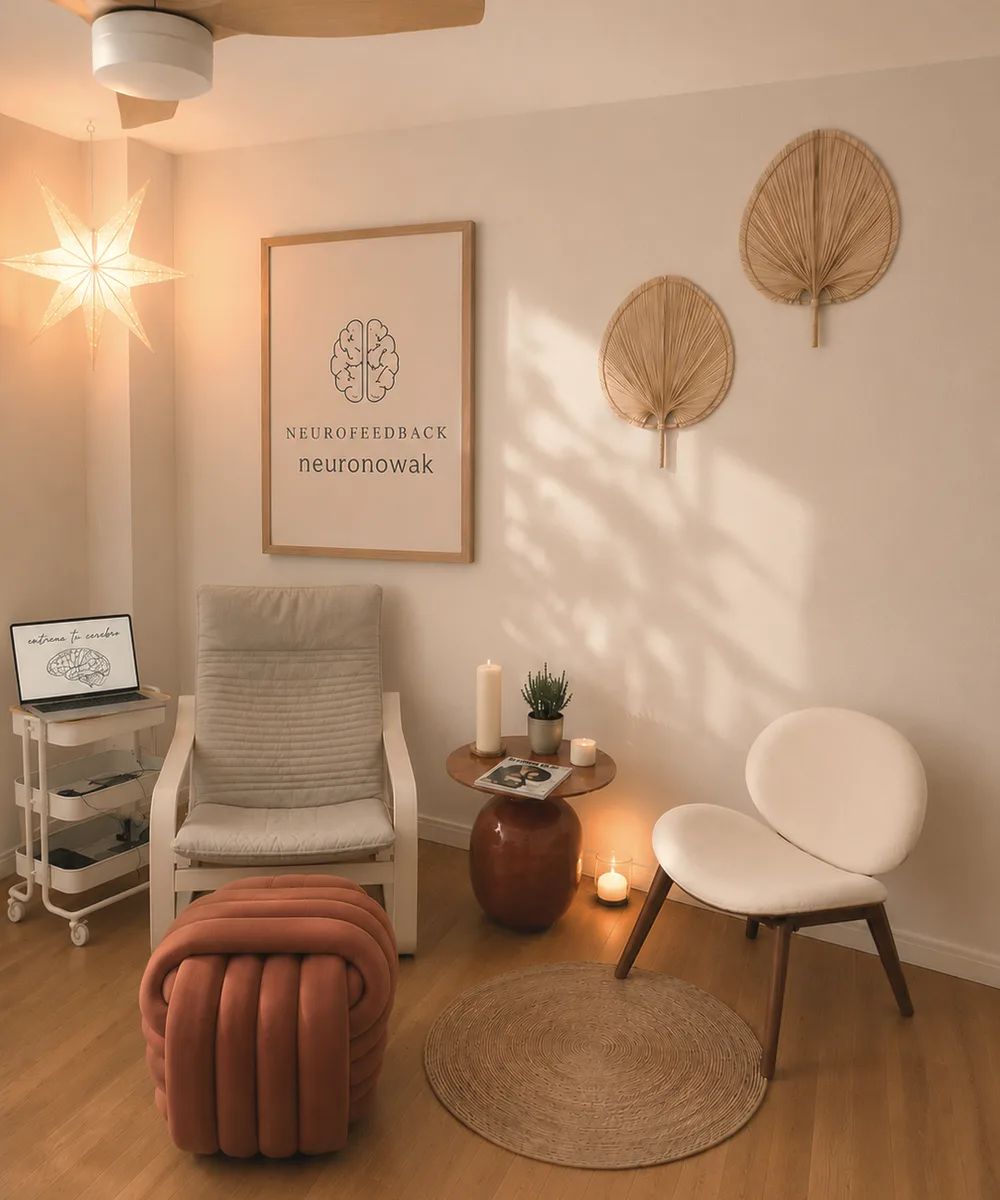
NEURONOWAK is a brain training centre offering neurofeedback in Málaga and La Cala del Moral. Individual, in-person sessions, no prior diagnosis needed and without medication. What follows is what I see in my practice, not a promise.
How it works in the brain
A brain under heavy demand for a long time doesn’t break all at once: it loses flexibility. It finds it harder to get into deep concentration, harder to come out of it, and ends up always running at a middle point that is neither focus nor rest.
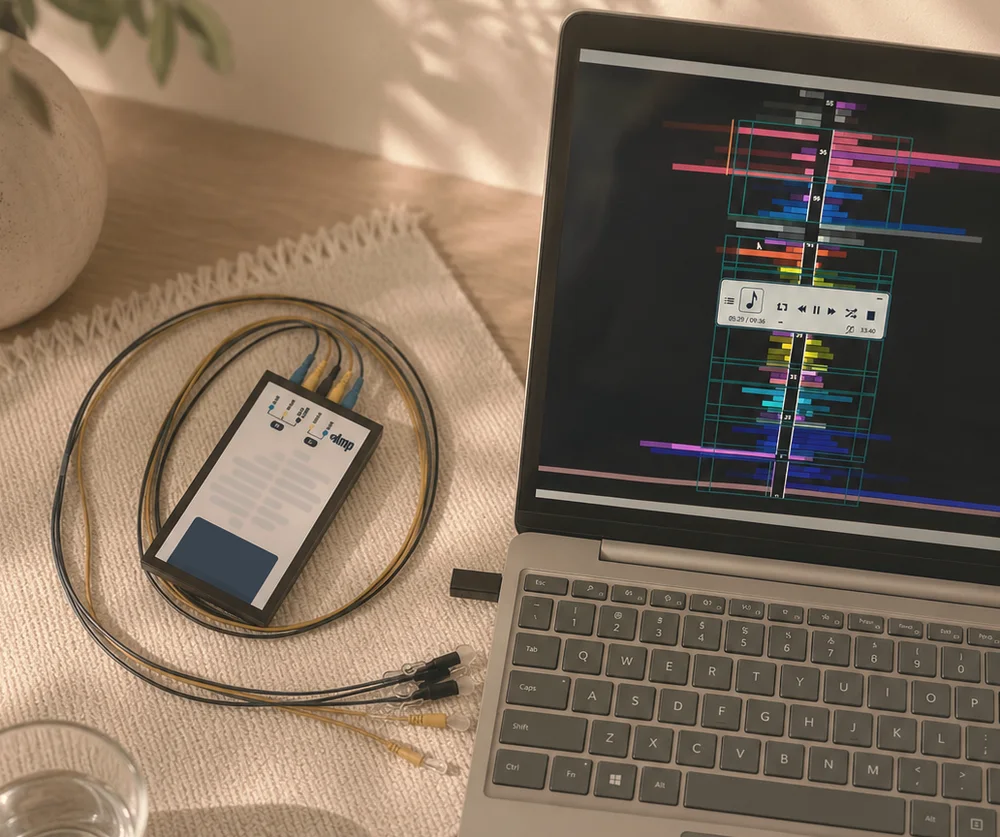
Brain training gives back that flexibility. The system reads your activity in real time and feeds it back to your own brain, which relearns how to change gear: revving up when it’s needed and winding down when it’s needed.
That’s exactly what separates sustainable high performance from the kind that ends in burnout.
In practice, the first things people usually notice are sleep and the quality of their recovery. The rest follows: thinking more clearly at the end of the day and responding instead of reacting.
See what a session looks like from the insideA short reel on @neuronowakWatch the reelYou’re not coming because you’re unwell
That’s exactly the point. You function, you deliver and from the outside nobody would say there’s anything to fix.
But you know you’re working below what you could. That your decisions at seven in the evening aren’t like the ones at nine in the morning. That it’s been weeks since you had a proper stretch of deep concentration. And that switching off at the weekend no longer recharges you the way it used to.
This isn’t a time-management problem. It’s a problem of cognitive resources, and it can be trained just like physical stamina.
What exactly gets trained
- Sustained focusKeeping your attention on something demanding for longer and at a lower cost. Not concentrating for longer on coffee, but spending less energy on the same thing.
- RecoveryThe ability to wind down when it’s time. It’s what separates people who perform for years from those who perform for two and burn out.
- Clarity under pressureDeciding with a clear head when there’s noise, rush or conflict, rather than in reactive mode.
How many sessions you need and when you’ll notice
- 33 min
- of music, seated, wearing headphones
- 50 min
- for the whole visit, roughly
- 1–2
- sessions a week
It depends on each person. In high-demand profiles, the first things to shift are usually sleep and the quality of recovery, before performance itself.
In the first three or four sessions the brain gets used to the system. Between the fourth and the tenth, the changes start to become noticeable. From the tenth onwards, they hold better from one session to the next.
Most people come once or twice a week. I explain it in detail in what neurofeedback sessions are like.
What you can expect
This won’t make up for sleeping five hours or an impossible schedule. No brain training fixes an unsustainable life: it makes it more bearable, which isn’t the same thing.
What it does work on is your capacity to recover, and that’s where it’s decided whether you perform for two years or for twenty.
And if you don’t notice anything after a few sessions, I’ll tell you and we’ll talk about it, rather than just adding more sessions.
«I’ve had 20 neurofeedback sessions with Aurélie and I can say it’s been one of the best decisions I’ve made this year.»
FAQ
I don’t have a problem. Does it make sense?
Yes, and it’s an increasingly common reason for coming. You don’t need to be unwell here. You’re training a capacity, just as you train your body without being injured.
How much time do I need to set aside?
A visit of about 50 minutes, once or twice a week. It’s probably the least demanding thing you’ll do all week: you sit down and listen to music.
Does it interfere with work on the same day?
No. Most people leave feeling calm and carry on with their day as normal. Some people feel sleepy afterwards the first time.
Is it compatible with coaching or therapy?
Absolutely. Coaching works on strategy and behaviour; the training works on the physiological foundation. With a regulated nervous system, everything else pays off more.
How many sessions will I need?
The usual approach is to work with 10- or 20-session packages. Short processes rarely get the chance to settle in.
You’ll find more answers in the FAQ and the prices under pricing and packages.
Keep reading
Performing below what you could?
Let’s talk, no strings attached. It’s a free 30-minute first conversation: you tell me what your weeks are like and we see whether this is a good fit.
or at info@neuronowak.com