Neurofeedback for migraines
It isn’t just a bad headache. It’s an aura that warns you, a light that bothers you, a noise that drills into you, and knowing that the next few hours, or the whole of the next day, are cancelled.
And around the pain there’s everything else: the plans you don’t confirm just in case, the meetings you drag yourself through with half a head, and the exhaustion of living on the lookout for the signs.
Migraine is a neurological disorder, not an exaggeration or a question of toughing it out. And part of what happens has to do with a brain that handles change poorly: changes in light, sleep, tension, routine or hormones.
We’re not here to replace your neurologist. We’re here to work on the ground before an attack.
No prior diagnosis neededWithout medicationFrom around age 3Cerrado de Calderón (Málaga) · La Cala del Moral


What usually improves
During attacks
- Fewer attacks over the months.
- Attacks that are less intense and shorter.
- Less sensitivity to light, noise and smells.
Between attacks
- Sleeping better, as poor sleep is one of the most common triggers.
- Less built-up tension in your neck and jaw.
- Less anticipatory fear and more ability to make plans.
NEURONOWAK is a brain training centre offering neurofeedback in Málaga and La Cala del Moral. Individual, in-person sessions, no prior diagnosis needed and without medication. What follows is what I see in my practice, not a promise.
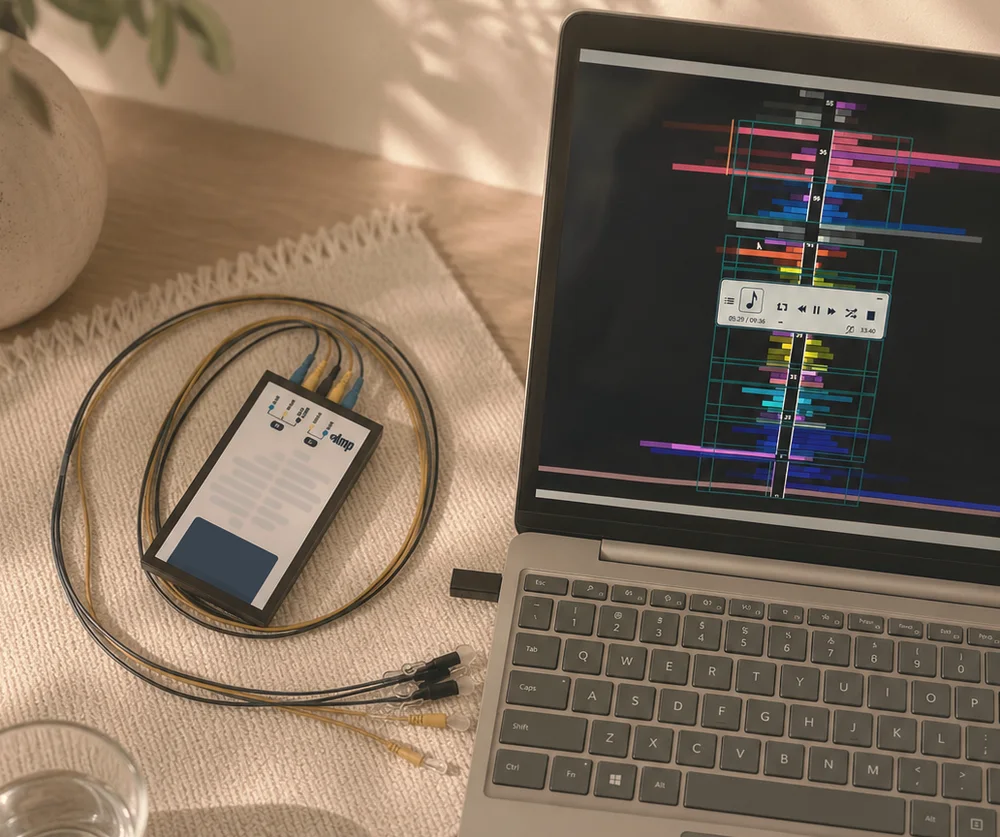
How it works in the brain
A migraine brain is a brain that overreacts to change. What for someone else is a bad night or a tense afternoon can, for yours, be what sets off an attack.
Brain training doesn’t act on the pain. It works on your underlying stability: the system reads your activity in real time and feeds it back, and your brain learns to regain its balance on its own, without being set off so much by every change.
That’s why here we don’t measure it by «it took the pain away». We measure it by how many attacks there have been this month compared with previous months, and how intense they were.
And there’s a side effect almost everyone appreciates: as sleep and tension usually improve before the attacks do, day-to-day life becomes more manageable even while the migraine is still there.
See what a session looks like from the insideA short reel on @neuronowakWatch the reelWhat I see in my practice
Hardly anyone comes to me about an occasional migraine. They come after years: of neurologists, triptans, attack diaries and plans cancelled at the last minute.
What people tell me about most isn’t the pain itself. It’s the life around the pain: not being able to commit to anything, the fear of it arriving in the middle of a meeting or a birthday party, and the exhaustion of always being on the lookout for the signs.
And there’s a pattern that keeps repeating: attacks get worse when the nervous system has been under strain for a while. It’s no coincidence that many appear just as you slow down, on a Friday afternoon or on the first day of your holidays.
Why neurofeedback makes sense here
Migraine is a neurological disorder, not a bad headache. And part of what happens has to do with a brain that handles change poorly: changes in light, sleep, tension, hormones.
The training doesn’t target the pain. It works on your underlying stability. When the nervous system regulates itself better, it copes better with those changes, and that’s what can translate into fewer attacks or less intense ones.
It isn’t magic, nor is it an alternative to your neurologist. It’s an extra layer that works where medication can’t reach: on the ground before an attack.
How many sessions you need and when you’ll notice
- 33 min
- of music, seated, wearing headphones
- 50 min
- for the whole visit, roughly
- 1–2
- sessions a week
With migraines, it’s worth being especially cautious about timescales. Progress isn’t judged session by session; it’s judged over months: how many attacks there have been and how intense, compared with previous months.
That’s why I recommend keeping a simple diary from the start. Two lines per attack is enough. Without that record it’s very hard to know whether anything is changing, because our memory of pain is very misleading.
Most people come once or twice a week. I explain it in detail in what neurofeedback sessions are like.
What I won’t promise you
I’m not going to tell you that this cures migraine, because it doesn’t. Nor that you’ll come off your medication, because that isn’t my decision.
Everyone responds differently: some people notice a lot and some notice little. On an issue where you’ve probably been promised things before, I’d rather err on the side of caution.
And if after a couple of months your diary shows no change, I’ll tell you and we’ll talk it through, rather than just adding more sessions.
«I’ve had 20 neurofeedback sessions with Aurélie and I can say it’s been one of the best decisions I’ve made this year.»
FAQ
Does neurofeedback cure migraine?
Cure it, no. What it does work on is the underlying stability on which attacks appear, and that’s what usually translates into fewer attacks or less intense ones. Migraine is a neurological disorder and your neurologist is still your neurologist: this goes alongside, not instead.
Can I keep taking my medication?
Yes. The training doesn’t interfere with medication, and any change to your dose is always decided by your neurologist, never by us.
Can I do it during an attack?
Better not. If you arrive in pain, the sensible thing is to postpone the session. The training is done between attacks, which is when it makes sense.
How long will it take to know whether it’s working for me?
With migraines, progress is judged over months, not sessions, comparing frequency and intensity with previous months. That’s why it’s worth keeping a diary from day one.
Does it also help with tension headaches?
We work on nervous system regulation in the same way, and it’s usually involved. But diagnosing which type of headache you have is a job for a healthcare professional.
You’ll find more answers in the FAQ and the prices under pricing and packages.
Keep reading
Been living with this for years?
Let’s talk, no strings attached. It’s a free 30-minute first conversation: you tell me your story and I’ll tell you honestly whether I think it can help you.
or at info@neuronowak.com