Neurofeedback and mood
It’s that heaviness that sleep doesn’t shift. Doing what needs doing without anything really reaching you. Looking at things you used to enjoy and feeling nothing.
You don’t have to be stuck in bed to be struggling. Lots of people keep working, caring and getting things done, and inside they’ve switched off. That counts too.
And there’s almost always a layer of guilt on top: for having no obvious reason, for the «I can’t complain».
We don’t treat depression here. What we do is train the nervous system’s self-regulation, which is the foundation your mood rests on. It works as support, never as a substitute.
No prior diagnosis neededWithout medicationFrom around age 3Cerrado de Calderón (Málaga) · La Cala del Moral

What usually improves
Mood
- More stability: fewer ups and downs within the same day.
- Less irritability and less reactivity.
- Noticing things again that had gone dull.
In your energy and your body
- Starting the morning with a bit more battery.
- Sleeping more regularly.
- Less brain fog and more ability to stay with a task.
NEURONOWAK is a brain training centre offering neurofeedback in Málaga and La Cala del Moral. Individual, in-person sessions, no prior diagnosis needed and without medication. What follows is what I see in my practice, not a promise.
How it works in the brain
When your mood has been low for a while, the brain settles into a pattern: less activation, less flexibility, less ability to get out of where it is. It’s a loop, and that’s why willpower alone isn’t enough to break it.
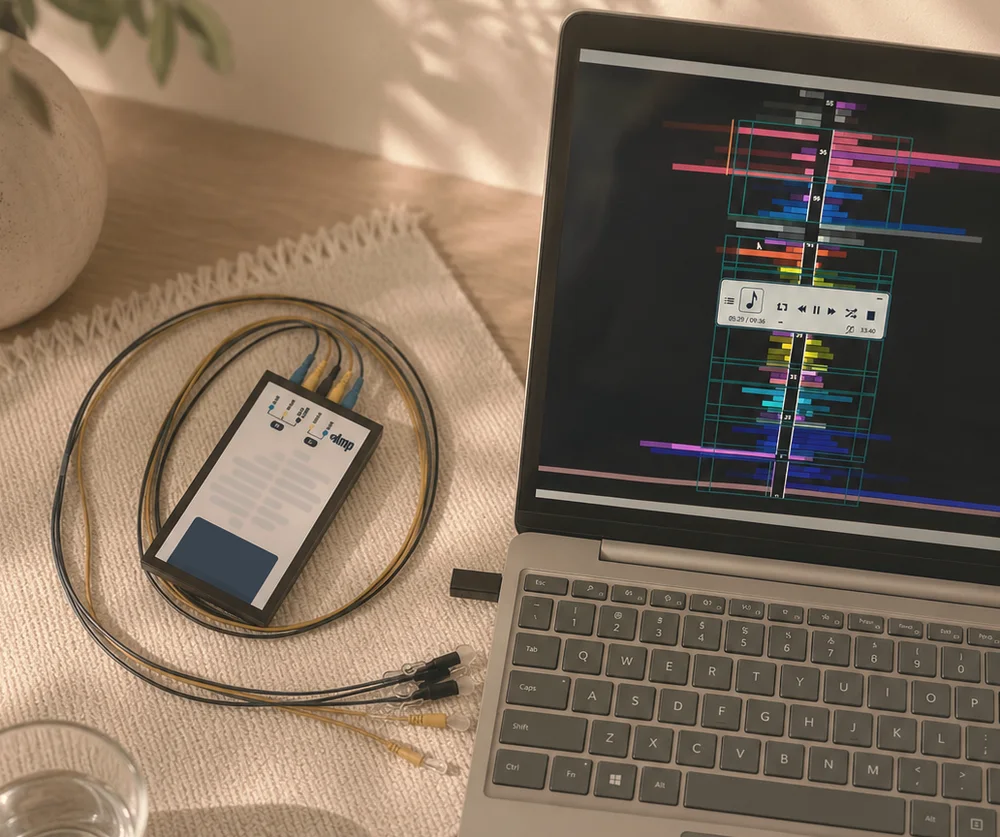
Brain training works on that flexibility. The system reads your activity and feeds it back to your own brain, which gradually recovers the ability to shift states instead of getting stuck in one.
It isn’t an antidepressant and doesn’t claim to be. It’s training, and what it trains is the ability to self-regulate.
What usually shifts first is sleep and your energy in the morning. Then, little by little, there are moments when you feel like doing something again. It isn’t a dramatic change: it’s that ordinary days start coming back.
See what a session looks like from the insideA short reel on @neuronowakWatch the reelFirst of all, an important point
We don’t treat depression here. Depression is a clinical diagnosis, and the person who diagnoses and treats it is a healthcare professional: your GP, your psychiatrist or your psychologist.
What we do is train the nervous system’s self-regulation, which is the foundation everything else rests on. That’s why it works well alongside treatment, not as a substitute for it.
And if you’re going through a difficult time, please get professional help. Don’t put it off until you can. This can come afterwards, or at the same time, but not instead.
What I see in my practice
Most people who come to me don’t say «I’m depressed». They say they feel flat. That they do what they have to do but don’t enjoy anything. That it’s hard to get going in the morning and their energy doesn’t come back, even after sleeping.
It often comes with irregular sleep, irritability and that feeling of watching your own life from the outside.
And there’s almost always a layer of guilt on top: guilt at not having any clear reason to feel this way.
How many sessions you need and when you’ll notice
- 33 min
- of music, seated, wearing headphones
- 50 min
- for the whole visit, roughly
- 1–2
- sessions a week
It depends on the person, and here more than anywhere. What I see is that the first things to shift are usually sleep and energy in the morning, before mood itself.
In the first three or four sessions, the brain gets used to the system. Between the fourth and tenth, recognisable changes begin, and often the people around you notice them first. From the tenth onwards, they hold better.
Most people come once or twice a week. I explain it in detail in what neurofeedback sessions are like.
What I won’t promise you
Nobody can promise you a result here, and in this area doing so would strike me as downright irresponsible. Neurofeedback is training: changes are gradual and everyone responds in their own way.
It doesn’t replace therapy or medication. If you’re in treatment, carry on with it; any change is decided by whoever prescribed it.
And if you don’t notice anything after a few sessions, I’ll tell you and we’ll talk about it, rather than just adding more sessions.
«I’ve done 12 neurofeedback sessions with Aurélie and it’s been a very positive experience. It helped me recover and regulate my sleep, and find a greater sense of inner peace.»
FAQ
Does neurofeedback treat depression?
Treat it, no: that’s a job for a healthcare professional. What we train here is the nervous system’s self-regulation, the foundation your mood rests on. In practice, many people notice they sleep better and mornings feel less heavy, and on that foundation everything else works better.
Can I do it if I’m taking medication?
Yes. The training doesn’t interfere with medication, and any change to your dose is always decided by whoever prescribed it.
And if I’m in therapy?
That’s the best combination. Therapy works on the content; training works on the foundation. With a better-regulated nervous system, therapy tends to go further.
Do I need a diagnosis to come?
No. We work with the person, not the label. That said, if you’ve felt this way for a while, it’s well worth having a healthcare professional assess you.
How many sessions will I need?
Most people work with 10- or 20-session packages, at one or two sessions a week, because lasting change needs continuity.
You’ll find more answers in the FAQ and the prices under pricing and packages.
Keep reading
Haven’t felt like yourself for a while?
Let’s talk, no strings attached. It’s a free 30-minute first conversation: you tell me how you’re doing and together we see whether this makes sense for you right now.
or at info@neuronowak.com