Neurofeedback for mental load
It’s eleven at night, the day is over but your mind isn’t. It keeps going over tomorrow, what you didn’t say this afternoon, what needs buying, the email still waiting for a reply.
You’re not ill and nothing is broken. You function, and from the outside everything looks fine. But inside you’re running at your limit, and you’ve known it for a while.
Mental load isn’t the work you do, it’s the work that never switches off: remembering, anticipating, organising, holding it all together. That work isn’t seen, isn’t shared and never rests.
Mental load is the sustained cognitive effort of constantly managing, planning and anticipating. When it goes on for too long, the brain stops telling the urgent from the non-urgent and ends up running permanently on alert.
No prior diagnosis neededWithout medicationFrom around age 3Cerrado de Calderón (Málaga) · La Cala del Moral

What usually improves
In your head
- Less overwhelm and less background noise.
- More clarity to make decisions without going round in circles.
- Remembering without having to write everything down.
- Being able to leave work behind at the end of the day.
In your body and mood
- Sleeping better and waking up with more energy.
- Less reactivity: the same things happen, but they don’t throw you in the same way.
- Less guilt and more breathing space.
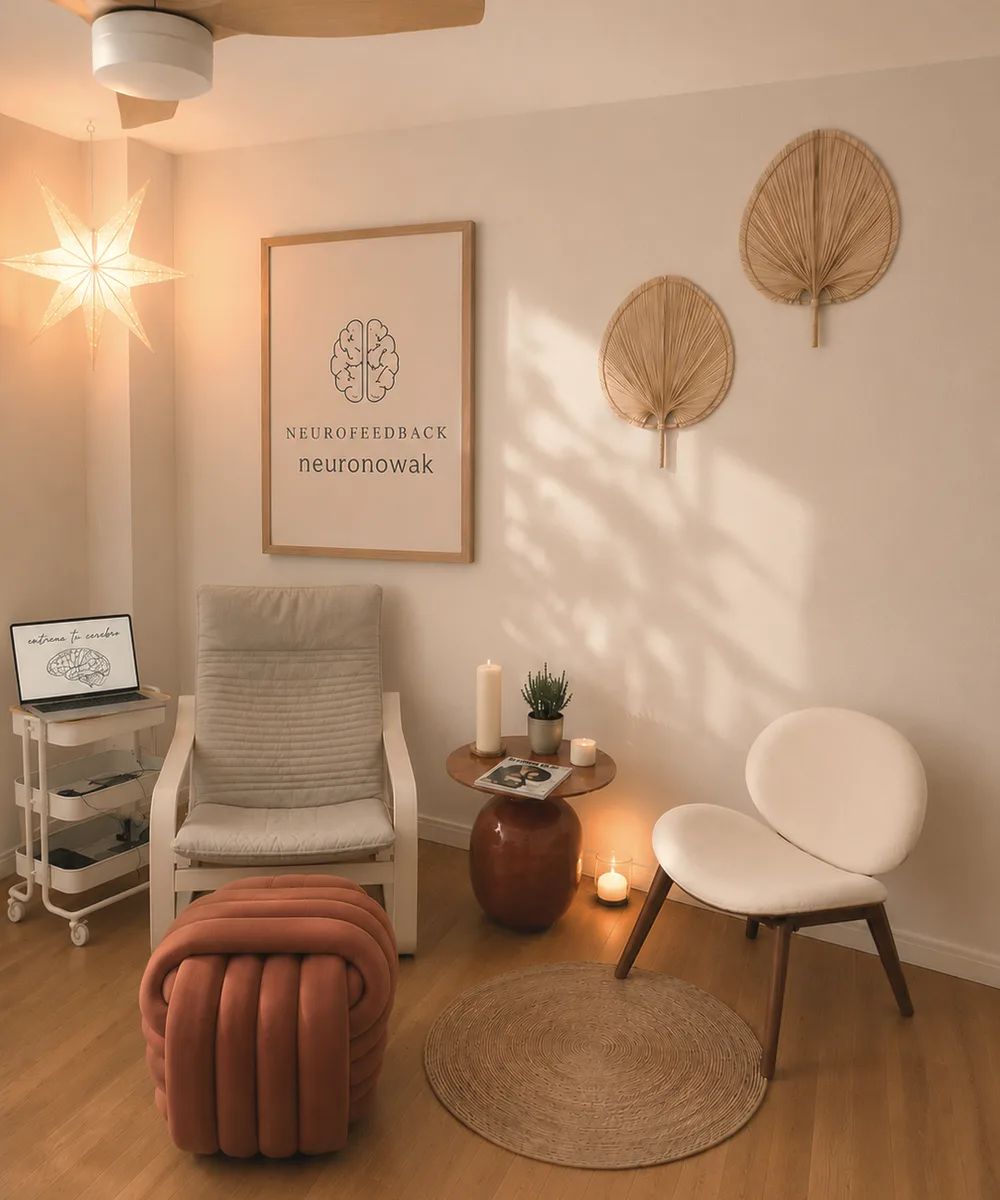
NEURONOWAK is a brain training centre offering neurofeedback in Málaga and La Cala del Moral. Individual, in-person sessions, no prior diagnosis needed and without medication. What follows is what I see in my practice, not a promise.
How it works in the brain
Mental load can’t be seen, but the brain pays for it. Anticipating, organising and remembering everything keeps a system switched on that ought to switch off now and then. And after years without switching off, it forgets how.
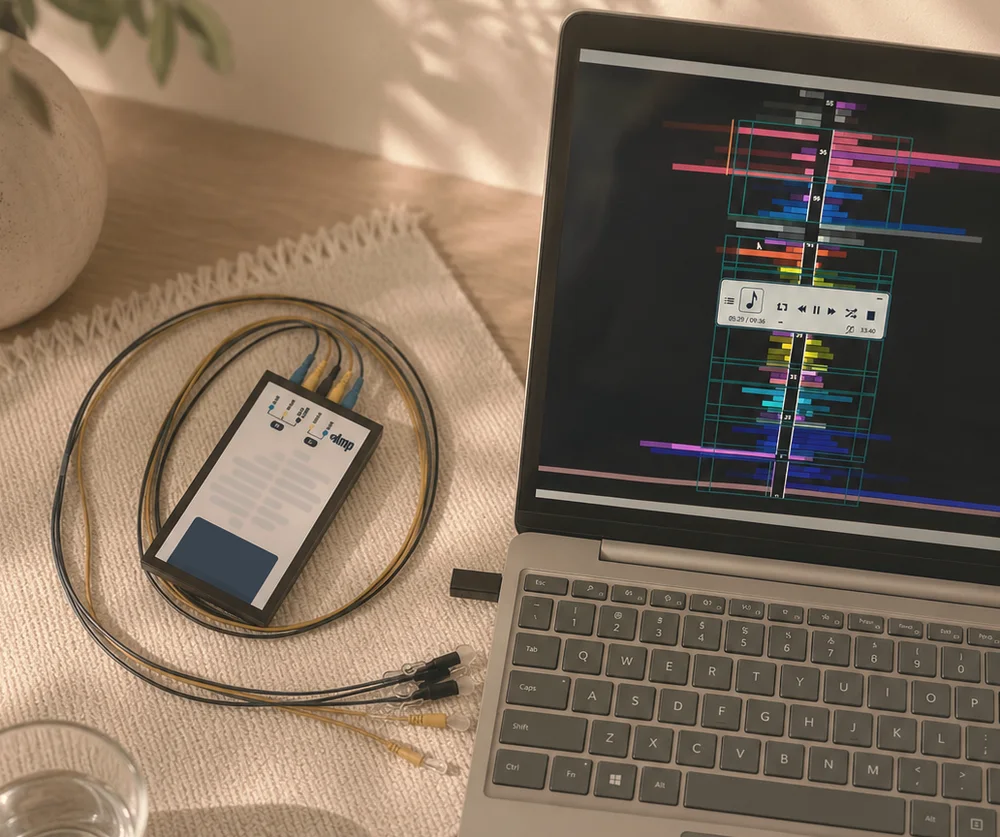
That’s where brain training comes in. The system reads your activity in real time and feeds it back to your own brain, which learns to recognise when it’s under strain and to return by itself to a steadier state. We don’t give it orders: we give it information.
What changes isn’t how much you’re carrying. It’s what carrying it costs you.
In practice, this usually means thinking more clearly, sleeping better, and that healthy distance that stops the usual things getting to you in the same way. There are still bad days, but they stop piling up one after another.
See what a session looks like from the insideA short reel on @neuronowakWatch the reelWho this happens to
Almost everyone can relate, but there’s one profile I see again and again: women between thirty-five and fifty-five, with a job, with children or elderly relatives to look after, and the feeling of being the logistics hub for everything.
They don’t come because they’re unwell. They come because they’re exhausted from being fine. They sleep so-so, wake up tired, get irritated by little things and feel guilty for getting irritated.
More and more, people without family responsibilities but with very demanding jobs come too. The mechanism is the same: a brain that can’t find the moment to switch off.
Why rest isn’t enough
This is the hardest part to accept. You go away for a weekend, sleep ten hours and come back just as overloaded. And you conclude there’s nothing to be done.
What’s happening is that rest restores energy, but it doesn’t retrain the pattern. If your nervous system has learnt to be permanently on alert, on Monday it’s back on alert. That’s why holidays bring relief but don’t solve it.
What really changes things is training the ability to wind down. You can’t decide that ability with willpower: you train it, just like physical stamina.
How many sessions you need and when you’ll notice
- 33 min
- of music, seated, wearing headphones
- 50 min
- for the whole visit, roughly
- 1–2
- sessions a week
It depends on the person. What I see in sessions is that the first things to shift are usually sleep and reactivity: the same things happen, but they don’t drive you up the wall in the same way.
In the first three or four sessions the brain gets used to the system. Between the fourth and tenth, the changes start to become noticeable. From the tenth onwards, they hold better between one session and the next. Most people come once or twice a week. I explain it in detail in what neurofeedback sessions are like.
What you can expect
This won’t take work off your plate or share the load out for you. That’s a conversation to have at home, and no session can replace it.
Neurofeedback is training, so changes are gradual and everyone responds at their own pace.
What can change is how you come to that conversation and to everything else: with more breathing space, less reactivity and a clearer head. And if after a few sessions you don’t notice anything, I’ll tell you and we’ll talk about it.
«I’ve done 12 neurofeedback sessions with Aurélie and it’s been a very positive experience. It helped me recover and regulate my sleep, and find a greater sense of inner peace.»
FAQ
Is this the same as stress?
They’re related but not the same. Stress is a response to a specific situation; mental load is the invisible work of holding everything together, and it has no beginning or end. If there’s anxiety too, that’s worth looking at as well.
I’m not ill – does it make sense to come?
Yes, and it’s the most common reason people come. You don’t need to be unwell to train. In fact, the sooner you start, the easier it is.
How long does a session last?
The music lasts 33 minutes. Including the set-up and the chat at the end about how it went, allow around 50 minutes for your visit.
Will I be able to switch off during the session?
You don’t have to try. You sit down, close your eyes and listen to music. For many people it’s the first moment of the day when they finally stop.
Does it replace therapy?
It doesn’t replace it, it complements it. If you’re in therapy, the training works on the foundation: a better-regulated nervous system. And on that foundation, therapy tends to go further.
You’ll find more answers in the FAQ and the prices under pricing and packages.
Keep reading
Did you recognise yourself?
Let’s talk, no strings attached. It’s 30 minutes, free of charge: you tell me how your days are going and we see whether this is right for you.
or at info@neuronowak.com