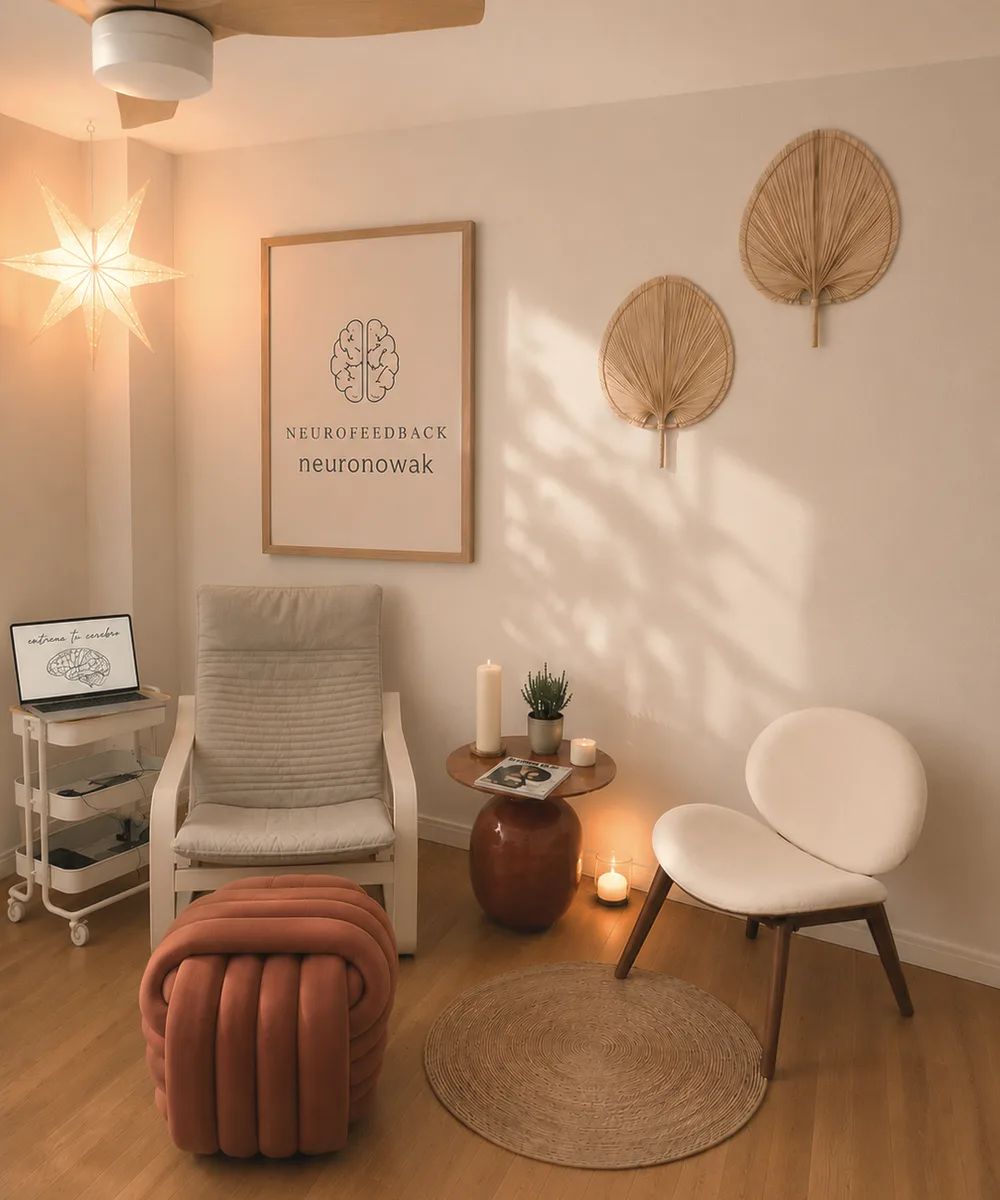
Neurofeedback for insomnia
It’s three in the morning and you’ve been staring at the ceiling for a while. Your body is exhausted; your mind isn’t. And the more you count the hours left, the more awake you are.
If that sounds familiar, it isn’t a lack of tiredness or willpower: it’s a brain that finds it hard to wind down. And that can be trained.
Sleep problems include difficulty falling asleep, waking during the night, waking too early and other symptoms such as night terrors, sleepwalking, narcolepsy, restless legs or teeth grinding. The physical and mental exhaustion that poor rest causes affects everything else, from your ability to concentrate to the quality of your relationships.
No prior diagnosis neededWithout medicationFrom around age 3Cerrado de Calderón (Málaga) · La Cala del Moral

What usually improves
In your sleep
- Falling asleep sooner, without so much tossing and turning.
- Sleeping through the night, or getting back to sleep faster if you wake up.
- Deeper, more restorative sleep, not just longer sleep.
- Less teeth grinding, fewer restless legs and fewer jolts awake.
The next day
- Waking up with energy instead of feeling you haven’t slept.
- Less brain fog in the morning.
- More tolerance for things that used to drive you up the wall.
NEURONOWAK is a brain training centre offering neurofeedback in Málaga and La Cala del Moral. Individual, in-person sessions, no prior diagnosis needed and without medication. What follows is what I see in my practice, not a promise.
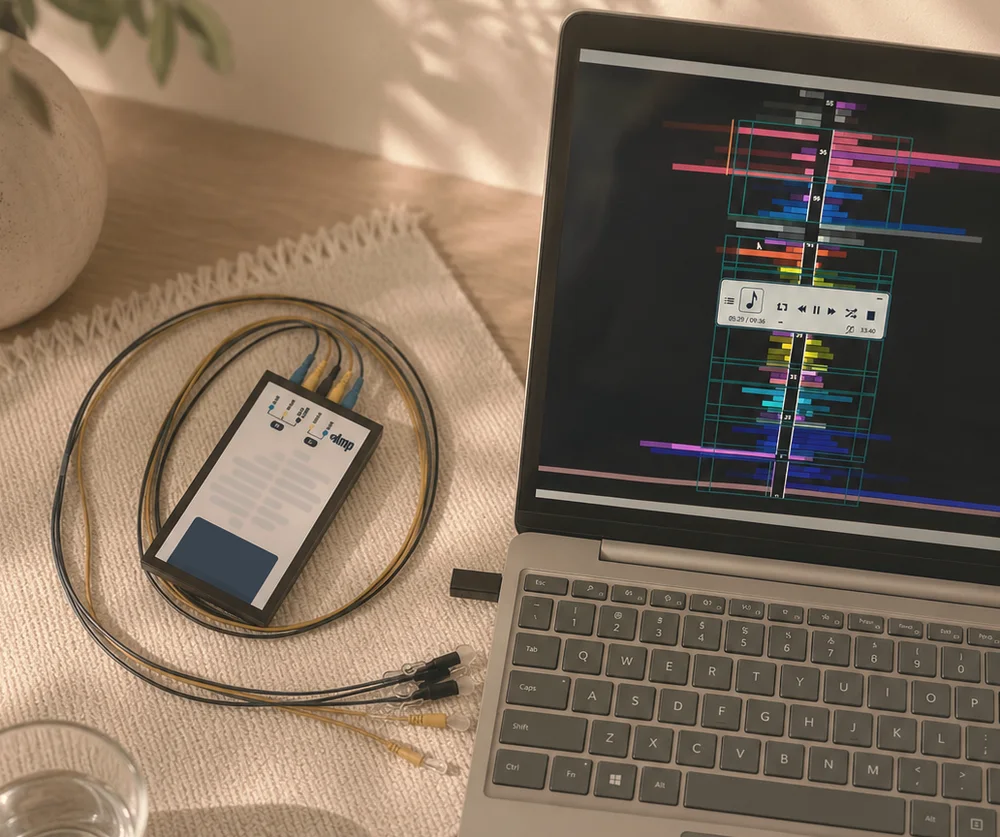
How it works in the brain
The brain doesn’t switch off all at once. It goes through stages, and to reach the deep ones it first needs to wind down. When it has been on alert for a long time, that wind-down doesn’t happen: you go to bed with the engine still running.
Brain training works right there. The system reads your activity in real time and feeds it back to you as information, and your brain learns to make that transition by itself, from the fast waves of an overactive mind to the slow ones that let you truly rest.
It isn’t about forcing sleep. It’s about recovering the ability to let go, which is what has been lost. That’s why it also works for people who have spent years trying things: it doesn’t ask for more effort, it gives back a skill.
As that settles in, the early-morning waking, the trouble dropping off and that feeling of getting up as tired as you went to bed tend to fade. And your mind stops lighting up at night: it becomes steadier and more predictable.
See what a session looks like from the insideA short reel on @neuronowakWatch the reelThe three types of insomnia I see most
- The kind that won’t let you drop offYou go to bed tired and your mind lights up: tomorrow’s to-do list, this afternoon’s conversation, what you didn’t say. An hour or two can go by.
- The kind that breaks up the nightYou fall asleep fine, but you wake at three or four and there’s no getting back. It’s the most common kind from your forties onwards.
- The kind that doesn’t restore youYou get your seven hours and wake up as if you hadn’t slept. It isn’t quantity that’s missing, it’s depth.
All three have something in common: a nervous system that never fully lets go.
Why willpower won’t fix insomnia
We tend to tell it the wrong way round: «I’m stressed, so I sleep badly». But it’s a circle. An overloaded brain rests worse, and a brain that rests worse handles the next day worse. Every bad night makes the next one a little more likely.
That’s why sleep hygiene advice helps when the problem is your habits, and falls short when the problem is a brain that doesn’t know how to wind down. That ability isn’t a matter of willpower. It’s trained.
How many sessions you need and when you’ll notice
- 33 min
- of music, seated, wearing headphones
- 50 min
- for the whole visit, roughly
- 1–2
- sessions a week
It depends on the person, but sleep is usually one of the first things to shift. This is what I see in my practice: in the first three or four sessions the brain gets used to the system; between the fourth and the tenth the changes start to become noticeable, and often whoever sleeps next to you notices before you do; from the tenth onwards they hold up better from one session to the next.
Most people come once or twice a week. I explain it in detail in what neurofeedback sessions are like.
What I won’t promise you
Nothing is guaranteed here, and be wary of anyone who says otherwise. Neurofeedback is training, not a medicine: the changes are gradual and everyone responds differently. Some people notice a lot, others notice little.
Nor does it replace your doctor. If you suspect sleep apnoea, if you take sleeping medication or if there’s something underlying that hasn’t been assessed, that’s for a healthcare professional to look at. The training supports, it doesn’t replace.
And if you don’t notice anything after a few sessions, I’ll tell you and we’ll talk about it, rather than just adding more sessions.
«I finished my first 10 sessions with Aurelie and I’ve noticed a big change in my main problem, which was sleep.»
FAQ
Does neurofeedback help with insomnia?
Yes, and it’s one of the most common reasons people come to me. Sleep is usually one of the first things to respond, because what we train is exactly the ability to wind down that’s missing when you can’t sleep. That said, it’s gradual training, not a medicine: the changes build session by session.
Do I have to stop my sleeping medication?
No, and certainly not on your own. The training doesn’t interfere with medication. Any change to your dosage is always decided by whoever prescribed it.
What if what I have is sleep apnoea?
Then the first step is to see a doctor. Sleep apnoea needs a specific diagnosis and treatment. Neurofeedback can support you afterwards, but it doesn’t replace that.
How long before I notice anything?
Sleep is usually one of the first things to shift. Many people notice changes between the fourth and tenth session, although some notice them sooner and others take longer.
Do I have to do anything during the session?
Nothing. You sit down, close your eyes and listen to music. You don’t need to concentrate or try to relax. Lots of people fall asleep, and that’s fine.
How many sessions will I need?
Most people work with 10- or 20-session packages, at one or two sessions a week, because lasting change needs continuity.
You’ll find more answers in the FAQ and the prices under pricing and packages.
Keep reading
Been sleeping badly for a while?
Let’s talk, no strings attached. It’s 30 minutes, free of charge: tell me what your nights are like and we’ll see if this is right for you.
or at info@neuronowak.com