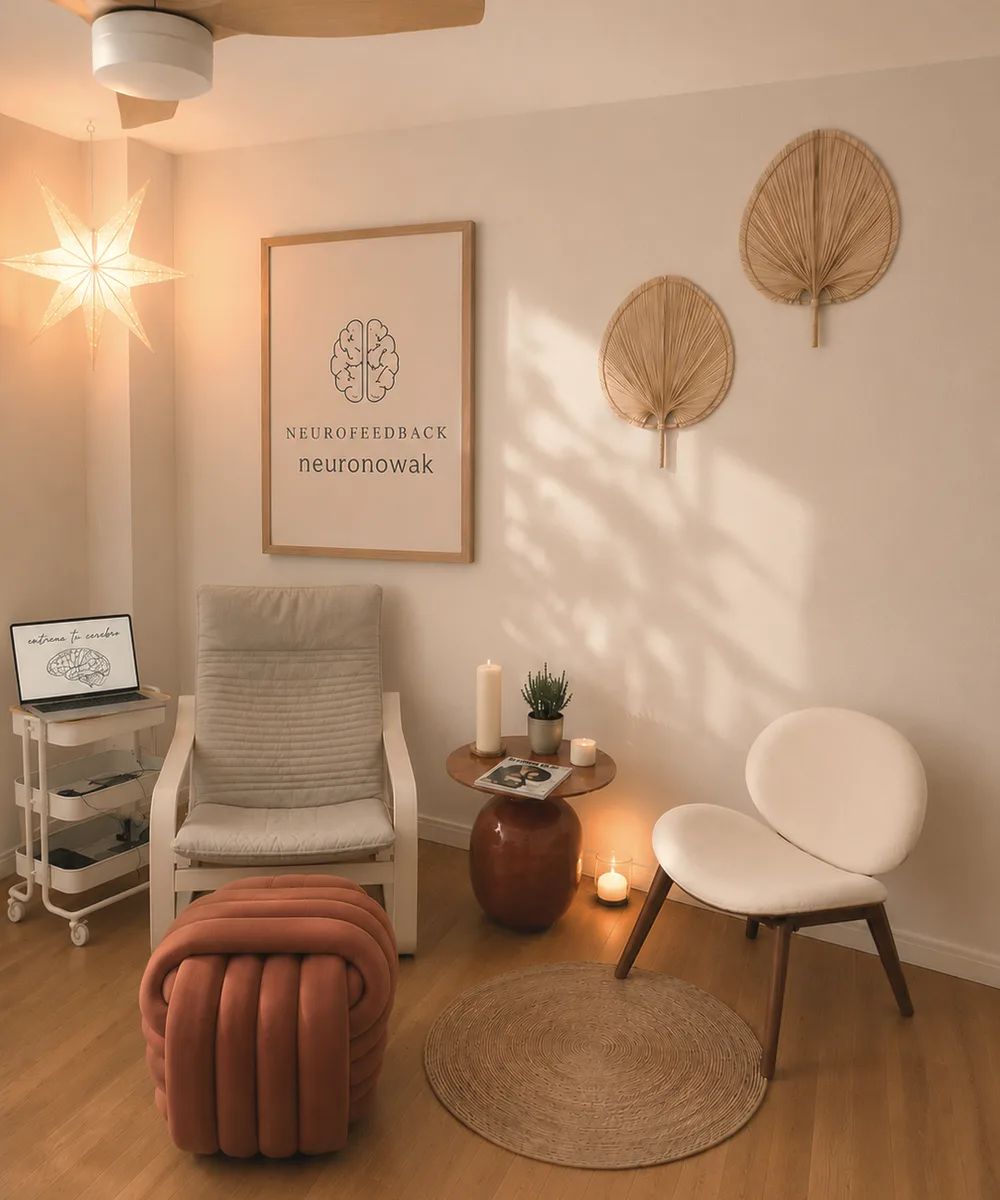
Neurofeedback for study difficulties
They know the lesson at home and it won’t come out in the exam. They spend two hours in front of the book and haven’t got through a single page. And the school report says, yet again, that they could do better if they tried harder.
That sentence does a lot of harm, because it’s hardly ever true.
Most academic difficulties aren’t a question of ability. They’re a question of sustained attention, working memory or tolerance of frustration. And that isn’t fixed with more hours of study or more pressure.
It’s fixed by training the foundation. And the foundation can be trained.
No prior diagnosis neededWithout medicationFrom around age 3Cerrado de Calderón (Málaga) · La Cala del Moral
What usually improves
In their studies
- Sustained attention for longer and with less effort.
- More reliable working memory: holding on to information while reasoning.
- Better reading comprehension and less rereading the same thing.
- More ability to plan and to finish what they start.
At home
- Less of a battle over homework.
- Less frustration and less giving up at the first hurdle.
- More confidence and less «I’m just stupid».
NEURONOWAK is a brain training centre offering neurofeedback in Málaga and La Cala del Moral. Individual, in-person sessions, no prior diagnosis needed and without medication. What follows is what I see in my practice, not a promise.
How it works in the brain
Studying asks for several things at once: keeping attention going, retaining what you read, organising what you understand and coping with frustration when it gets hard. If that foundation is shaky, it doesn’t matter how many hours you throw at it.
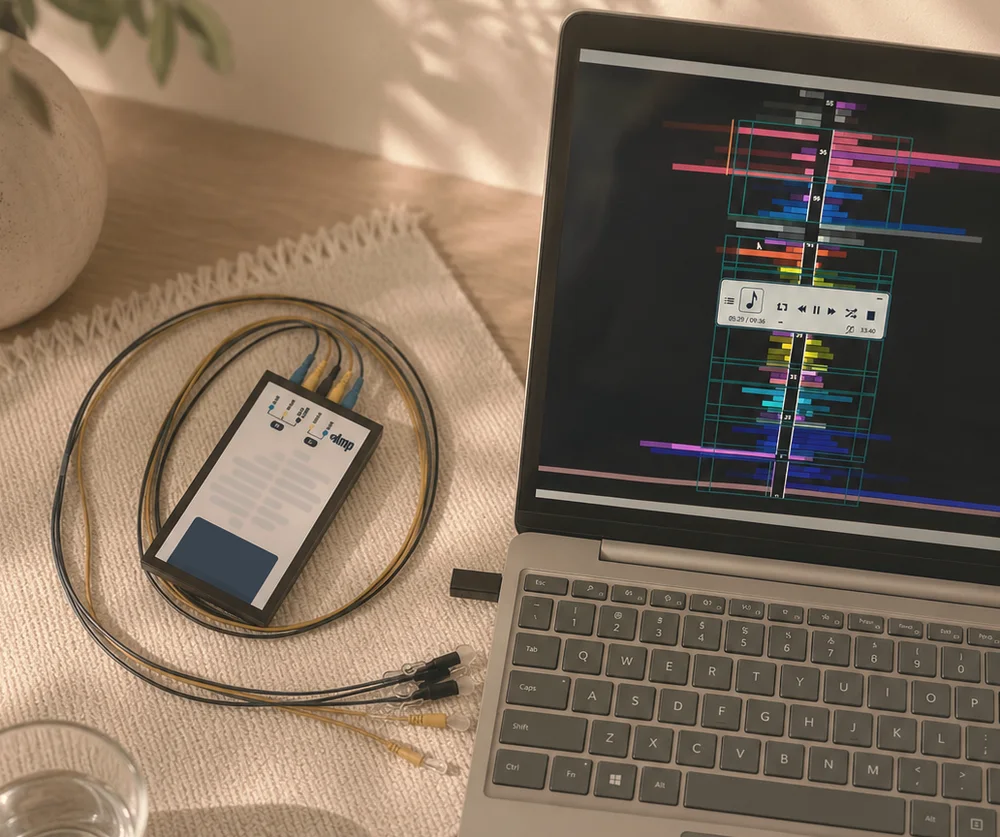
Brain training works on that foundation. The system reads brain activity in real time and feeds it back, and the brain learns to organise itself better on its own, with less scattering and less inner noise.
It doesn’t teach content or replace a tutor. What it does is make that support pay off: with a better-regulated brain, everything else works better.
And yes, over time that shows in their marks, because studying stops being an uphill struggle. But something usually changes first, and to me it matters just as much: the atmosphere at home. Fewer rows over homework, fewer tears and a bit of confidence regained. Very often that’s the first thing parents tell me.
See what a session looks like from the insideA short reel on @neuronowakWatch the reelWhat usually really happens
They understand what’s explained in class. They know the lesson when you test them at home. And then the exam comes and it just doesn’t come out.
Or worse: they spend two hours in front of the book and haven’t got through a single page. Not because they don’t want to, but because every five minutes their mind has wandered off and they’ve had to start again.
Most academic difficulties aren’t a problem of ability. They’re a problem of sustained attention, working memory or handling frustration. And that isn’t fixed with more hours of study or more pressure.
The cost you don’t see
A child or teenager who tries hard and doesn’t get results ends up drawing a very dangerous conclusion: that they’re stupid.
They don’t say it like that, but you can tell. They stop trying, sabotage themselves before they start or pick a fight so they don’t have to face the task. And at home everything turns into a negotiation.
That’s why, when we work on this, the first thing to change usually isn’t their marks. It’s the atmosphere: fewer rows, fewer tears and a bit of confidence regained. And the marks come afterwards, once studying stops taking three times the effort.
How many sessions you need and when you’ll notice
- 33 min
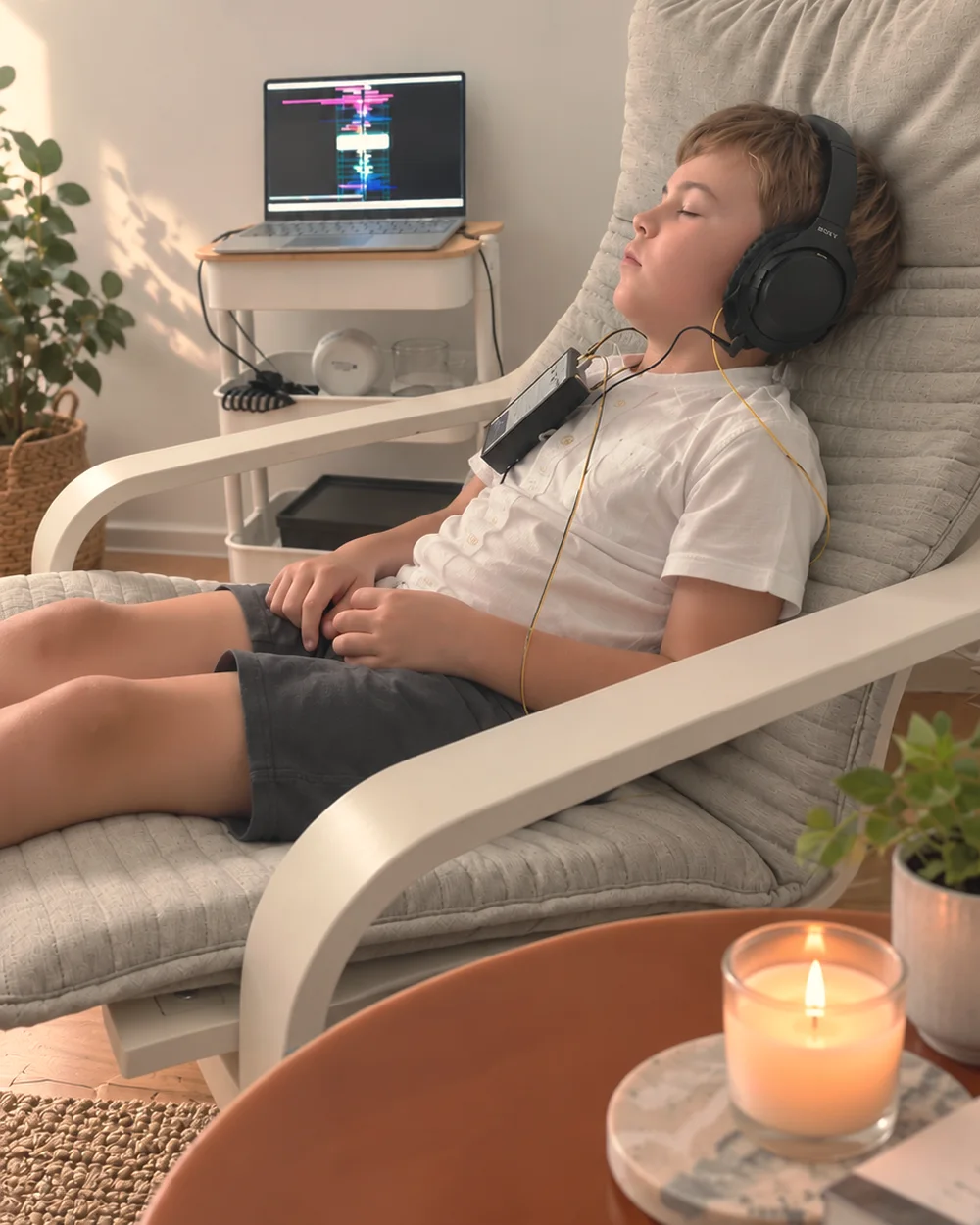
- of music, seated, wearing headphones
- 50 min
- for the whole visit, roughly
- 1–2
- sessions a week
It depends on each case. What I see in my practice is that the first things to shift are usually sleep and frustration levels, and only after that sustained attention.
In the first three or four sessions the brain gets used to the system. Between the fourth and the tenth, you start hearing comments like «they did their homework without a fight». From the tenth onwards, the changes hold better between sessions.
Most people come once or twice a week. I explain it in detail in what neurofeedback sessions are like.
What you can expect
This doesn’t teach the syllabus or change things overnight. It works on the foundation, and from there studying pays off: that’s why marks usually improve, but as a consequence, not as a shortcut.
Nor does it replace educational psychology support, speech therapy or a professional assessment if ADHD or a specific learning difficulty is suspected. If that’s what’s needed, that’s what’s needed.
And if after a few sessions you don’t see anything, I’ll tell you and we’ll talk about it, rather than just adding more sessions.
«I finished my first 10 sessions with Aurelie and I’ve noticed a big change in my main problem, which was sleep.»
FAQ
Will this improve their marks?
Yes, it usually ends up showing in their marks, but not because the training teaches the syllabus. What improves is the foundation: sustained attention, working memory and tolerance of frustration. Once that falls into place, studying pays off, exams go better and the effort finally turns into results. What usually changes first is the atmosphere at home; the marks follow a little later.
From what age?
From about three years old, as long as the child can stay seated for the 33 minutes the music lasts. And there’s no upper limit: teenagers and university students train too.
Is a diagnosis needed?
No. But if you suspect there may be undetected ADHD or dyslexia, it’s worth having a professional assess it. The training supports; it doesn’t diagnose.
Do they have to do anything during the session?
Nothing. They sit down, listen to music and that’s it. No concentrating, no effort. For a child who links effort with failure, that alone is a relief.
Can it be combined with tutoring?
Yes, and that’s ideal. Tutoring works on the content; the training works on the foundation. With a better-regulated brain, tutoring pays off more.
You’ll find more answers in the FAQ and the prices under pricing and packages.
Keep reading
Does this sound familiar at home?
Let’s talk, no strings attached. It’s a free 30-minute first conversation: you tell me about the situation and I’ll tell you honestly whether I think it can help.
or at info@neuronowak.com