Neurofeedback for mental wellbeing
Nothing’s wrong. And that’s exactly why you’ve probably gone years without looking after this.
You sleep reasonably well, you function, you get things done. But you wake up with no battery, you do things without really enjoying them and you feel more absent than you’d like.
With our bodies, we don’t wait until we’re injured to start moving. With our heads, we do: we hold on until something breaks.
Mental wellbeing can be trained too. And it trains much better sooner rather than later.
No prior diagnosis neededWithout medicationFrom around age 3Cerrado de Calderón (Málaga) · La Cala del Moral

What usually improves
Day to day
- More calm in the background, without having to look for it.
- More presence: being where you are.
- Less reactivity to things that used to unsettle you.
- More clarity to decide without going round in circles.
In your rest and energy
- Sleeping better and waking up with more battery.
- Recovering faster after an intense period.
- More room for what you want to do, not just what you have to do.
NEURONOWAK is a brain training centre offering neurofeedback in Málaga and La Cala del Moral. Individual, in-person sessions, no prior diagnosis needed and without medication. What follows is what I see in my practice, not a promise.
How it works in the brain
A brain with headroom isn’t one that never gets stirred up. It’s one that knows how to come back. It switches on when needed and settles when it isn’t, without staying switched on for hours after the reason has passed.
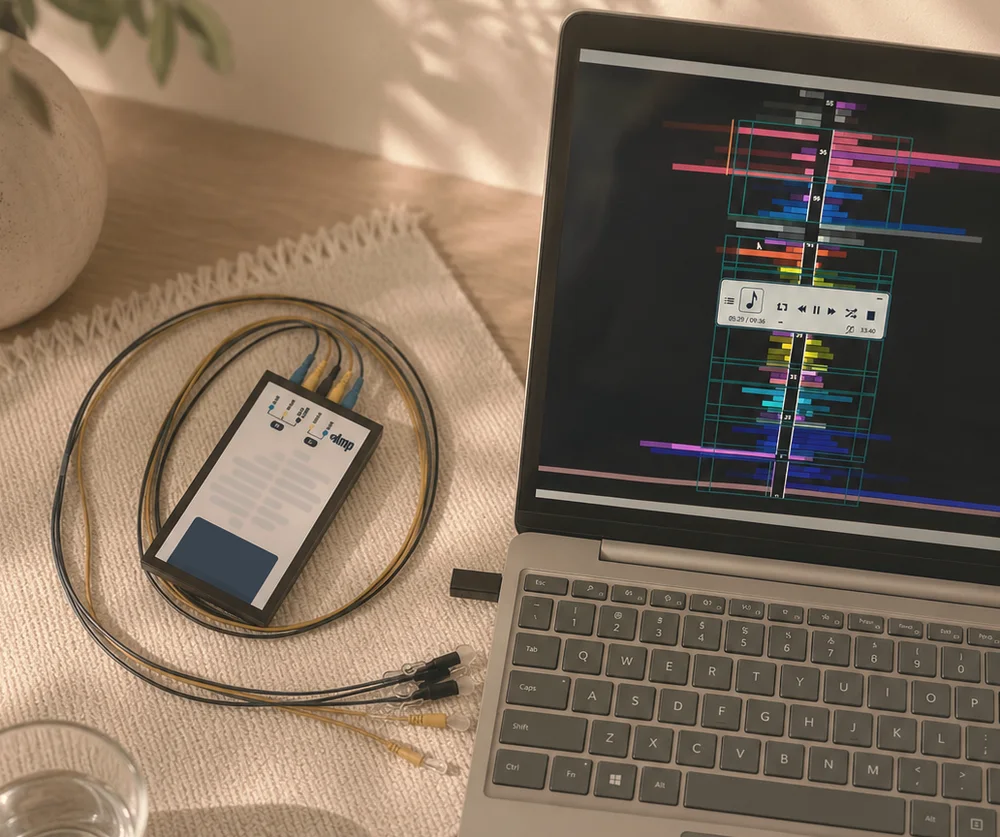
That’s exactly what neurofeedback trains: the system reads your activity in real time and feeds it back to your own brain, which gradually recovers its ability to return to balance on its own.
You don’t need a problem for it to make sense. In fact, the further you are from your limit, the easier it is and the sooner you notice it.
What people tend to describe isn’t euphoria. It’s something else, quieter and more useful: sleeping better, getting angry less, thinking more clearly and feeling there’s some space between what happens and how you respond.
See what a session looks like from the insideA short reel on @neuronowakWatch the reelYou don’t have to be struggling to come
This is probably the hardest idea to get across, because we’re used to looking after our heads only once they already hurt.
We don’t do that with our bodies. Nobody waits until they’re injured to start moving. But with our brains, we do: we hold on until something breaks and then we look for help.
Mental wellbeing can be trained too, and it trains better sooner rather than later. The further you are from your limit, the easier it is and the faster you notice it.
Who comes here without having a problem
People who sleep reasonably well but wake up with no battery. People who aren’t unwell, but aren’t present either: they do things and don’t enjoy them.
People who already look after their minds (they meditate, exercise, have done therapy) and want to go a step further. And people who’ve been through a tough patch, have come out the other side, and want to consolidate so it doesn’t happen again.
In every case, the goal is the same: a nervous system with more headroom.
How many sessions you need and when you’ll notice
- 33 min
- of music, seated, wearing headphones
- 50 min
- for the whole visit, roughly
- 1–2
- sessions a week
It depends on the person. When there’s no specific problem, what people usually notice first is their sleep and a kind of healthy distance from the things that used to unsettle them.
In the first three or four sessions, the brain gets used to the system. Between the fourth and tenth, recognisable changes appear. From the tenth onwards, they hold better from one session to the next.
Most people come once or twice a week. I explain it in detail in what neurofeedback sessions are like.
What you can expect
This isn’t going to make you happy. Wellbeing isn’t a permanent state, and be wary of anyone who sells it to you that way.
Changes are gradual and everyone responds at their own pace.
What it can give you is headroom. And with headroom, almost everything else becomes easier to handle. If you don’t notice anything after a few sessions, I’ll tell you and we’ll talk it through.
«I’ve had 20 neurofeedback sessions with Aurélie and I can say it’s been one of the best decisions I’ve made this year.»
FAQ
I don’t have any specific problem. Can I come?
Yes, and it’s one of the best times to do it. The further you are from your limit, the easier training is and the sooner you notice it.
How is it different from meditating?
You don’t have to do anything. Meditation is a practice that takes consistency and technique; here you sit down, listen to music and the learning happens on its own. The two complement each other very well.
Does it replace therapy?
It doesn’t replace it, it goes alongside it. Therapy works on the content: your story, your relationships, what’s happening to you. Training works on the physiological foundation. People who do both usually say they get more out of therapy.
How long does a session last?
The music lasts 33 minutes. Including setting up and the time at the end, allow about 50 minutes for your visit.
How many sessions will I need?
Most people work with a 10-session or 20-session package, at one or two sessions a week.
You’ll find more answers in the FAQ and the prices under pricing and packages.
Keep reading
What if you didn’t wait until you’re struggling?
Let’s talk, no strings attached. It’s a free 30-minute first conversation: you tell me how you’re doing and we see whether this is right for you.
or at info@neuronowak.com