Neurofeedback
What is neurofeedback?
Neurofeedback is training, not treatment. Sensors read your brain activity while you listen to music, and each time the system detects an abrupt transition in that activity, the sound pauses for a split second.
That tiny pause doesn’t force anything. It’s just information. And the brain, which is built to learn from the information it receives, corrects itself on its own. You don’t have to concentrate, try to achieve anything or get it right.
No prior diagnosis neededWithout medicationFrom around age 3Cerrado de Calderón (Málaga) · La Cala del Moral
How it works, step by step
- 1
Your brain activity is read
Five sensors are placed: two on the scalp and three reference sensors on the ears. They don’t emit electricity or send anything to the brain; they only record the tiny electrical activity (EEG) produced by neurons.
- 2
The software looks for abrupt transitions
The signal is analysed hundreds of times per second. What matters isn’t a particular frequency, but the moments when the brain jumps abruptly from one state to another. Those jumps are the footprint of a system that easily becomes dysregulated.
- 3
The information comes back instantly
Each time one of those transitions appears, the music pauses briefly. It isn’t a reward or a punishment: it’s a mirror. The brain notices the pause and adjusts, just as you straighten up without thinking when you catch your reflection in a shop window.
- 4
Your brain makes the correction, not the machine
This is what sets it apart from almost everything else. The system doesn’t decide which pattern is right or push in any direction: it only gives information back. It’s the brain that reorganises itself.
- 5
With repetition, the change lasts
A single session has an effect that fades. Repeated over several weeks, the nervous system starts to take the more stable state as its reference and stops needing the reminder.
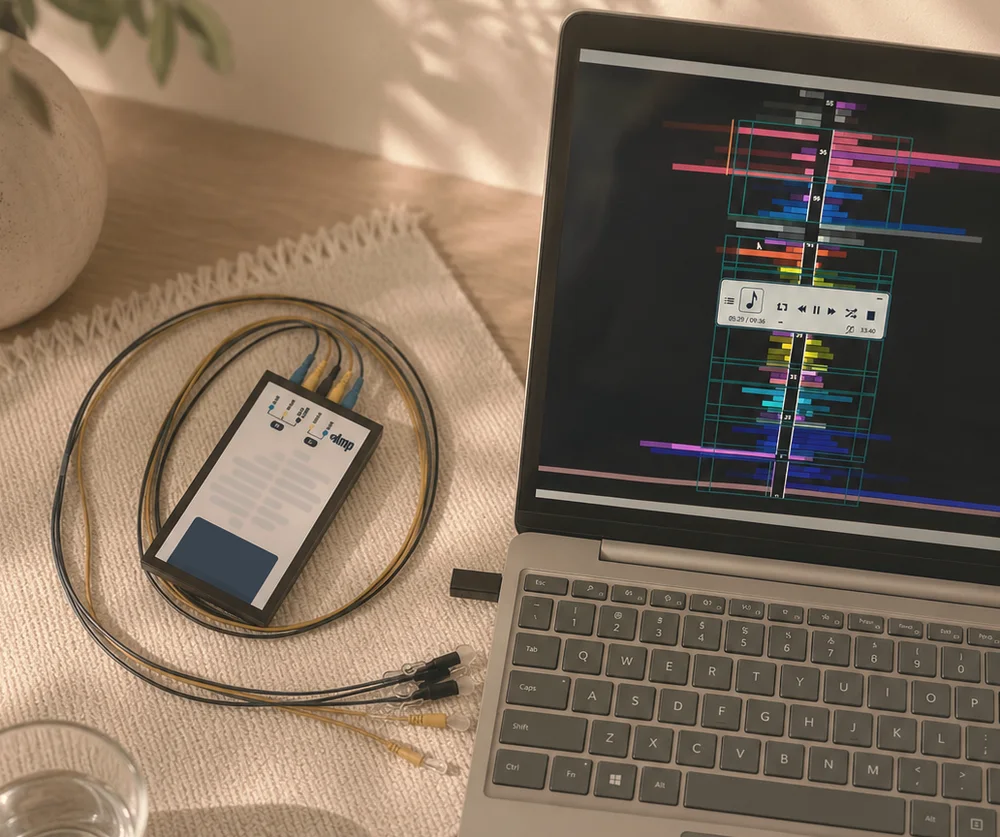
What a session looks like from the inside
As it learns to self-regulate, each person notices the improvement wherever their nervous system was most out of balance: in sleep, mood, concentration, energy or how they handle stress. That’s why two people with the same number of sessions describe different things.
You can read on about the benefits of neurofeedback, see pricing and packages or message me and tell me about your situation.
See what a session looks like from the insideA short reel on @neuronowakWatch the reelNEURONOWAK is a brain training centre offering neurofeedback in Málaga and La Cala del Moral. Individual, in-person sessions, no prior diagnosis needed and without medication.
What a session feels like

Not much, and that can be puzzling at first. You sit down, put on the headphones and watch images on a screen while music plays. The music lasts 33 minutes, and the whole visit takes about 50 minutes.
During that time there’s nothing to get right. You can close your eyes, doze off, think about your shopping list or cry if you need to. None of that interferes, because the training doesn’t depend on your willpower.
Afterwards, the most common feeling is of having rested, a bit like after a short nap. Some people leave sleepy, others energised. It’s also normal not to notice much the first few times: what shifts at the start shifts at night, not in the chair.
How it differs from what you’ve already tried
- It isn’t relaxationRelaxation lowers your heart rate while you practise it. What’s trained here is your ability to return to calm on your own, even when you aren’t thinking about it.
- It isn’t therapyYou don’t have to talk about your childhood or understand why things happen to you. It combines perfectly well with therapy – in fact the two often go well together – but they don’t fill the same role.
- It isn’t medicationNothing enters your body and it doesn’t interact with anything you’re taking. Any change to your medication is decided by whoever prescribed it, never by me.
- It isn’t stimulationThe equipment doesn’t send currents, pulses or magnets. It only reads. That’s the difference people find hardest to believe – and the most reassuring once they understand it.
Who it’s for and who it isn’t
Anyone who can stay settled for 33 minutes can train: children from around age three, teenagers, adults, older people and pregnant women. You don’t need a diagnosis or a named problem.
What mostly brings people in: not sleeping, background anxiety, a mental load that won’t switch off, difficulty holding attention, tiredness that sleep doesn’t fix, or simply wanting to get their energy back.
When I’ll tell you this isn’t the right place. If what you need is a diagnosis, if there’s a crisis that requires medical care, or if you’re looking to replace an ongoing medical treatment. In those cases I’ll tell you straight and point you in the right direction.
What the evidence says, without the frills

Neurofeedback has been researched for decades and the evidence varies by area. It has been studied most in ADHD: a meta-analysis published in European Child & Adolescent Psychiatry found effects that held between six and twelve months after training ended – something unusual for non-drug interventions.
For sleep, anxiety and performance there are studies, but with smaller samples and less consistent protocols. That doesn’t mean it doesn’t work: it means there’s less published research, and I think it’s more useful to tell you than to hide it.
What I can say without any caveats is that it’s non-invasive and has no known side effects. That changes the equation quite a bit when you’re deciding whether to try it.
How many sessions you need
Most people need around 10 sessions, at one or two a week. Fewer than one a week drags the process out without making it cheaper; more than two doesn’t speed it up, because the brain needs the time between sessions as much as the session itself.
The first changes usually show up in the early sessions, almost always in sleep or in your background level of tension. Between sessions six and twelve, they stop depending on how your week has gone. From session thirteen onwards, they settle in.
You can see the breakdown and the cost on the pricing and packages page.
What neurofeedback is not
- It doesn’t read your thoughtsIt reads electrical changes, the way a thermometer reads temperature. It doesn’t know what you’re thinking, and neither do I.
- It doesn’t cure. It trainsThe difference matters: what improves is your nervous system’s ability to regulate itself, and that shows up differently in each person.
- It doesn’t work the same for everyoneSome people notice a lot, and quickly; others notice little. If nothing shifts after several sessions, I’ll tell you and we’ll stop.
- It isn’t magic or an expensive placeboIt’s a tool with a specific mechanism, specific limits and a published price.
FAQ
What exactly is neurofeedback?
It’s training for your nervous system. Sensors pick up your brain’s electrical activity and, every time they detect an abrupt shift, the music you’re listening to pauses for a split second. That cue is enough for the brain to start adjusting on its own. Nothing is sent to it: it simply gets information back about what it has just done.
Does it hurt or have side effects?
It doesn’t hurt and has no known side effects. The sensors don’t prick and don’t give off any electricity. The most that can happen is you leave feeling a bit sleepy or, now and then, feeling that things have been stirred up; that usually lasts a few hours.
Do I have to do anything during the session?
No. You listen to music and watch images. You can fall asleep if you like: the training doesn’t depend on you paying attention or getting it right.
Can it be combined with therapy or medication?
Yes. It doesn’t interfere with either. Any change to your medication is decided by whoever prescribed it.
From what age can you do it?
From about three years old, as long as the person can stay settled during the session. Older people and pregnant women can train too.
How long before you notice it?
Usually something shifts in the first few sessions, normally in sleep or in your background level of tension. Lasting changes come later, between sessions six and twelve.
How is it different from traditional neurofeedback?
Traditional neurofeedback works on specific frequencies that are chosen to be strengthened or reduced. The approach I use doesn’t set a target in advance: it gives back information about the shifts in the signal and lets the brain make the adjustment. Traditional neurofeedback has more published research behind it; it’s worth knowing that.
You’ll find more answers in the FAQ and the prices under pricing and packages.
Keep reading
Still have a question?
Message me and I’ll get back to you shortly. I’ll tell you whether this is a good fit for what you’re dealing with, and if it isn’t, I’ll tell you that too.
or at info@neuronowak.com